Home Service & Contractor Ops
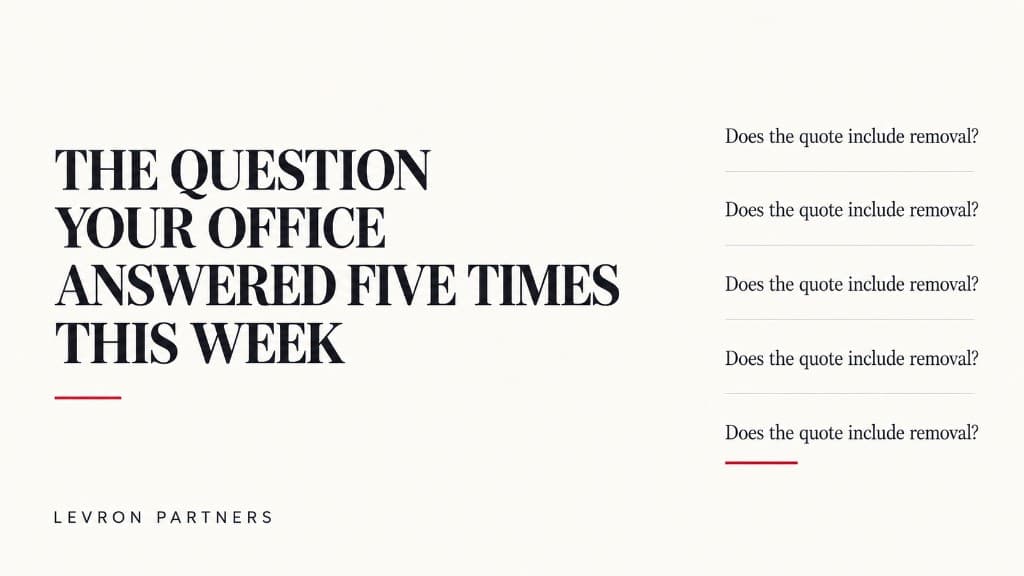
The Question Your Office Answered Five Times This Week
A homeowner calls about an install quote. Then another texts about the warranty. Someone else wants to know what happens after the inspection. Your team knows the answer. It may live in the estimator’s head, an old text thread, or the office manager’s memory — so someone stops, checks the details, and types it again.
Start with the one you’re tired of
Pick one question that comes up every week. Start with the one your team is tired of answering, not the hardest one. Write down the answer you actually give, including anything that depends on the job or the written quote.
A saved reply also gets the first response out faster. The window that matters is still the one in the 5-minute rule.
Then paste this into the AI tool you already use:
Customers often ask us:

"[Paste the question, without the customer's personal details]"

Here is how our business actually answers it:

"[Write your rough answer. Include the conditions and what our
team needs to check before making a promise.]"

Turn this into a reply our office can save and reuse.

- Answer the question first.
- Use three sentences or fewer.
- Sound like a person at a construction or home service company.
- Keep the conditions and the next step.
- Do not invent prices, schedules, warranty terms, or what's
  included in a customer's quote.

Then write a shorter version for a text message.
What that looks like on an install
Here’s an HVAC example. A homeowner asks, “Does the install quote include removing my old unit?”
The answer depends on the scope in their estimate. Your team’s rough note might say: “Check the written quote. If removal is listed, it’s included. If it isn’t, confirm with the tech before saying yes.”
That can become a saved reply:
“I can check that against your written estimate. If removal is listed in the scope, it’s included; if it isn’t, I’ll confirm with the technician before giving you an answer.”
It won’t eliminate the need to check the quote. It gives everyone the same clear response while that check happens.
Save the version you would actually send
Read the AI’s version before saving it. Fix anything you wouldn’t say or couldn’t stand behind. Put the approved reply where your office already works — a shared document, your email templates, or saved replies in your messaging tool. Review it when your process or terms change.
Then do the next question: warranty coverage, scheduling, what the homeowner needs to do after an inspection. Over time, the answers your best people give stop living only in their heads.
Aristotle Taylor is the CEO and co-founder of Levron Partners. We find where an operation is leaking hours, then build the software that removes them.
Keep reading

Guide
The AI Slowdown Debate — and What It Means for Your Business
Washington turned down requests from AI leaders to slow down. Markets fell, and paying customers filed lawsuits. Plus an AI that speaks 97 languages.
Guide
Stop Retyping Things That Are Already on Paper
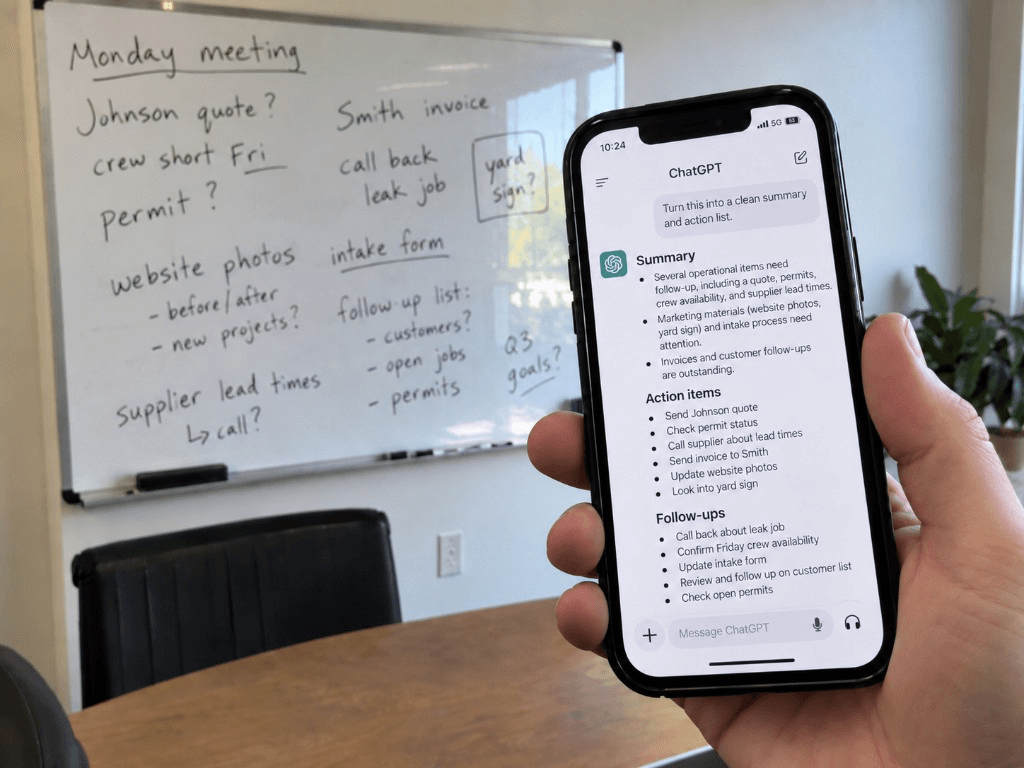
Every AI app has a camera button. Most people have never pressed it. Here's what it actually does — and where it's genuinely useful for a trade or service business.

Guide
The 5-Minute Rule: What Slow Lead Response Is Costing Your Trade Business
Leads contacted within 5 minutes are 100x more likely to book than leads contacted after 30 minutes. Most contractors take days, not minutes. Here's what that gap is actually costing you — and how to close it without hiring anyone.
Let’s find the hours.
Bring your last ten quotes and a normal week off the schedule. Forty-five minutes is usually enough to see where it’s going.